
Short answer
You can have a first consultation by video, in English, before you buy a ticket. If surgery is the right call, you fly or drive to Monterrey, get operated in a private hospital, stay until the surgeon clears you to travel, and continue rehab at home with remote follow-up.
That’s the whole thing. The rest of this page is the detail, because the detail is where people get into trouble.
Why patients come to Monterrey and not somewhere farther
Distance matters more after surgery than before it. Monterrey is about two hours by nonstop flight from Dallas, and roughly three hours by road from the Laredo crossing. If something needs a second look after you’re home, coming back is a short trip, not an expedition.
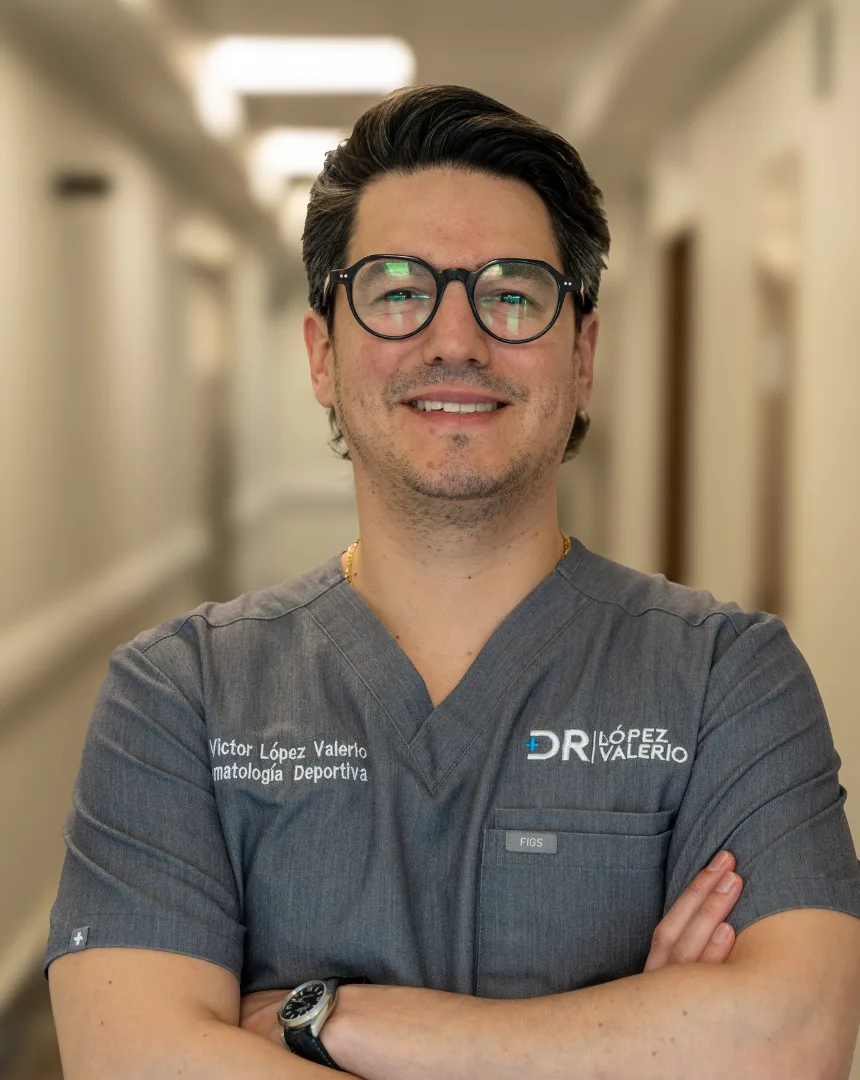
I trained in Monterrey, then did fellowships in knee arthroscopy and sports traumatology in Barcelona and in joint reconstruction and cartilage repair at Brigham and Women’s Hospital, Harvard Medical School. I’m a Fellow of the American College of Surgeons. I mention it because you should check it, not because a résumé fixes a knee. More on how to check in how to choose a surgeon if you travel for surgery.
Step 1: The video consultation
Before anyone talks about dates, I want to see three things:
- Your imaging. MRI for meniscus, ligament or cartilage problems. Standing X-rays if we’re talking about arthritis or a replacement. Send the images, not only the report.
- Your history. When it started, what you’ve tried, what makes it worse.
- Your goal. Going back to pickup basketball is a different plan than walking the dog without pain.
Sometimes the answer on that call is “you don’t need surgery yet.” I’d rather tell you that over video than after you’ve flown in. A good share of knees get better with a well-done rehab program, and the non-surgical options for knee arthritis are worth reading before you decide.
Step 2: The plan and the quote
If surgery makes sense, you get a written plan: the procedure, the hospital, how many days you should stay in Monterrey and what the quote includes. Ask for the quote in writing and ask what is not included. The article on what a knee surgery quote should include walks through it line by line.
There’s a general range for a knee replacement in our cost guide (in Spanish), but your number depends on the procedure, the implant or biomaterial and the hospital. A price without a diagnosis is a guess, so the real quote comes after we see your imaging.
Step 3: Travel and the days before surgery
Plan to arrive before the surgery date. You’ll have an in-person evaluation and the pre-operative tests the anesthesia team needs. Bring:
- Your imaging on a USB drive or a download link.
- A list of every medication and supplement you take, with doses.
- Someone who comes with you. Not optional for a knee replacement, strongly recommended for everything else.
The CDC recommends talking with your U.S. doctor before traveling for care and having a plan for complications agreed with both sides. I agree. Tell your primary care doctor what you’re doing.
Step 4: Surgery and the first days
Arthroscopy is usually outpatient or a one-night stay, so many patients are back at their hotel the same day or the next. A knee replacement needs a hospital stay and more days in the city before travel.
The thing that decides when you go home is not the calendar. It’s swelling, how well you’re moving the leg and your risk of blood clots, because surgery and long trips both raise that risk. I wrote a separate piece on when you can fly or drive home after knee surgery.
Step 5: Back home
Before you leave you get a written rehab plan that your physical therapist at home can follow, plus your surgical report and discharge notes. Follow-up visits are done by video. If your therapist has questions, they can send them.
Here’s my honest opinion on this part. Most bad outcomes I see in patients who traveled for surgery were not a bad operation. They were a good operation followed by six weeks of nobody watching the rehab. Book your physical therapist at home before you travel.
What I’d ask any surgeon in Mexico, including me
- Are you board certified, and where can I verify it?
- Which hospital, and what accreditation does it have?
- What happens if I have a complication after I’m back in the U.S.?
- Will I get my records in English?
If the answers are vague, keep looking.
Next step
Send your MRI or X-rays and a short description of the problem by WhatsApp and we’ll set up the video consultation. The knee surgery in Mexico page has the rest of the details.
Medical sources
- Centers for Disease Control and Prevention. Medical Tourism. CDC Yellow Book.
- Centers for Disease Control and Prevention. Medical Tourism: Travel to Another Country for Medical Care.