
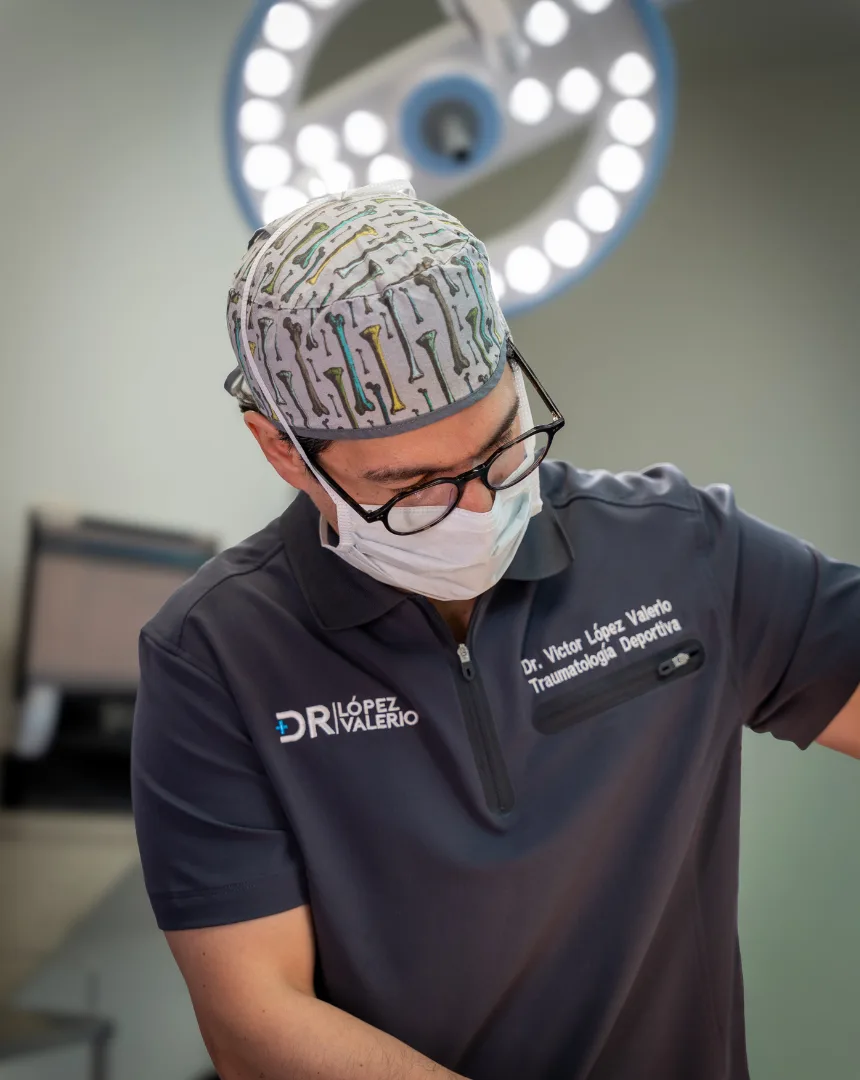
Short answer
Before you book anything, check four things: the surgeon’s license, the specialty board certification, the hospital, and what happens if something goes wrong after you’re home. All four can be verified, and a good surgeon will hand you what you need to do it without being asked twice.
1. The license, in the official registry
In Mexico, every doctor has a cédula profesional for medicine, and specialists have a second one for the specialty. Both are public. Ask for the numbers and look them up in the Ministry of Education’s registry at cedulaprofesional.sep.gob.mx.
If someone presenting as an orthopedic surgeon doesn’t have a specialty cédula, stop there.
2. Board certification
The Mexican board for orthopedics is the Consejo Mexicano de Ortopedia y Traumatología (CMOT). Certification is renewed periodically, so ask if it’s current, not only if they “are certified”. You can contact the CMOT to confirm.
Some surgeons also hold the FACS title, Fellow of the American College of Surgeons. It’s useful for U.S. patients because it’s a credential you already know how to read, and you can look it up in the ACS Find a Surgeon directory. I’m a Fellow of the ACS, and I’d rather you check it than take my word for it.
3. Training that matches your problem
A general orthopedic surgeon can be excellent. But if your problem is an ACL, a complex meniscus tear or cartilage damage, ask how much of their practice is knees and where they trained for it. My own training after residency was in knee arthroscopy and sports traumatology in Barcelona and in joint reconstruction and cartilage repair at Brigham and Women’s Hospital, Harvard Medical School.
Here’s my opinion: ask the surgeon how often they recommend not operating. If the answer is “rarely”, that tells you something.
4. The hospital
Ask which hospital, and then ask about it:
- Is it certified by Mexico’s Consejo de Salubridad General, or accredited by an international body such as Joint Commission International?
- Does it have an ICU on site, in case it’s needed?
- Is anesthesia done by a certified anesthesiologist?
I operate at Centro Médico Hospital San José and Christus Muguerza San Pedro, both private hospitals in the Monterrey area. Ask me about them the same way.
5. The plan for after
This is the part most people skip, and the one that matters most once you’re home.
- Will you get your surgical report and discharge notes in English?
- Who do you call if you have a fever at 2 a.m. three days after flying back?
- Is follow-up by video included?
- Is there a rehab protocol your physical therapist at home can follow?
The CDC recommends agreeing on a plan for complications with both the overseas team and your U.S. doctor before you travel, and getting travel health insurance that covers medical evacuation. Both are good advice.
Red flags
- A price quoted before anyone has seen your MRI.
- Pressure to book fast: “the discount ends Friday”.
- No clear answer on who handles complications.
- A surgeon you never actually talk to before the day of surgery.
Next step
If you want to start with a video consultation in English, send your MRI or X-rays by WhatsApp. And for the full picture of how the trip works, read knee surgery in Mexico for U.S. patients.
Sources
- Secretaría de Educación Pública. Registro Nacional de Profesionistas.
- Consejo Mexicano de Ortopedia y Traumatología. CMOT.
- American College of Surgeons. Surgeon qualifications.
- Centers for Disease Control and Prevention. Medical Tourism. CDC Yellow Book.